

After-School Routine
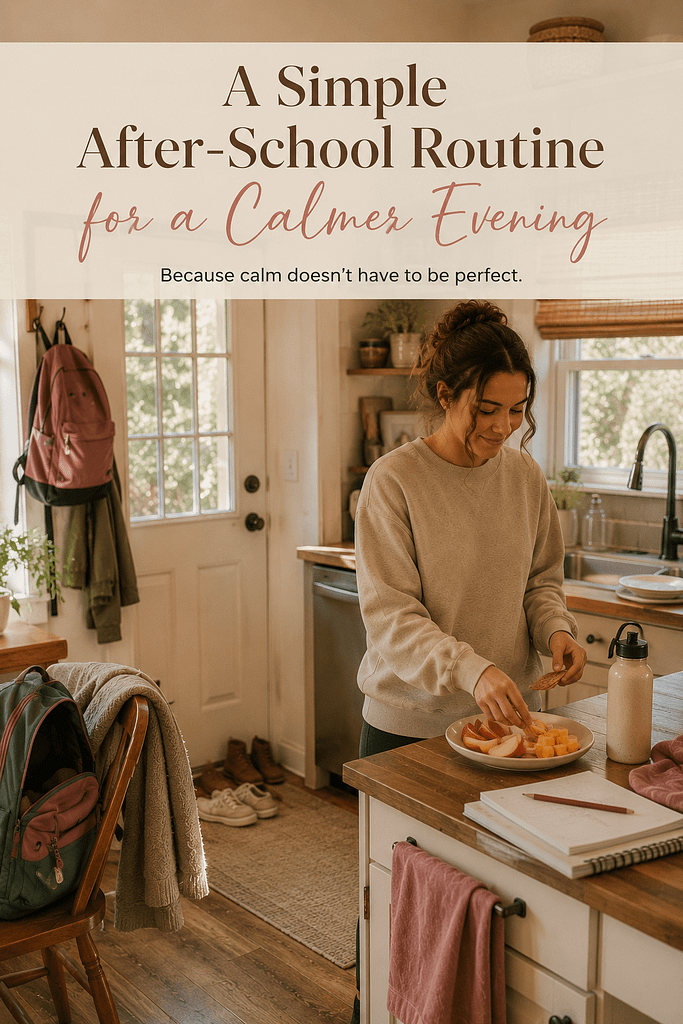
A Simple After School Routine
That late-afternoon stretch can make an otherwise normal day unravel quickly.
Everyone is hungry, someone suddenly needs something they cannot find, and bags, shoes, papers, dishes, and random belongings seem to appear everywhere they do not belong.
Dinner still needs to happen, and somehow everyone needs you at the exact same time.
If your evenings sometimes feel chaotic before they have even really started, you are not doing anything wrong.
You probably do not need a stricter schedule, either.
Sometimes you just need a few predictable touch points to help everyone transition from the busy part of the day into home.
After-School Routine
Calm Does Not Have to Be Perfect
A calmer evening can still include backpacks on the floor, frozen pizza for dinner, homework complaints, and the sudden realization at 8:30 that the laundry is still in the washer.
The goal is not perfection; it is simply creating a little less friction.
That is really what unscripted parenting is about: raising good humans without expecting yourself to be a perfect mom.
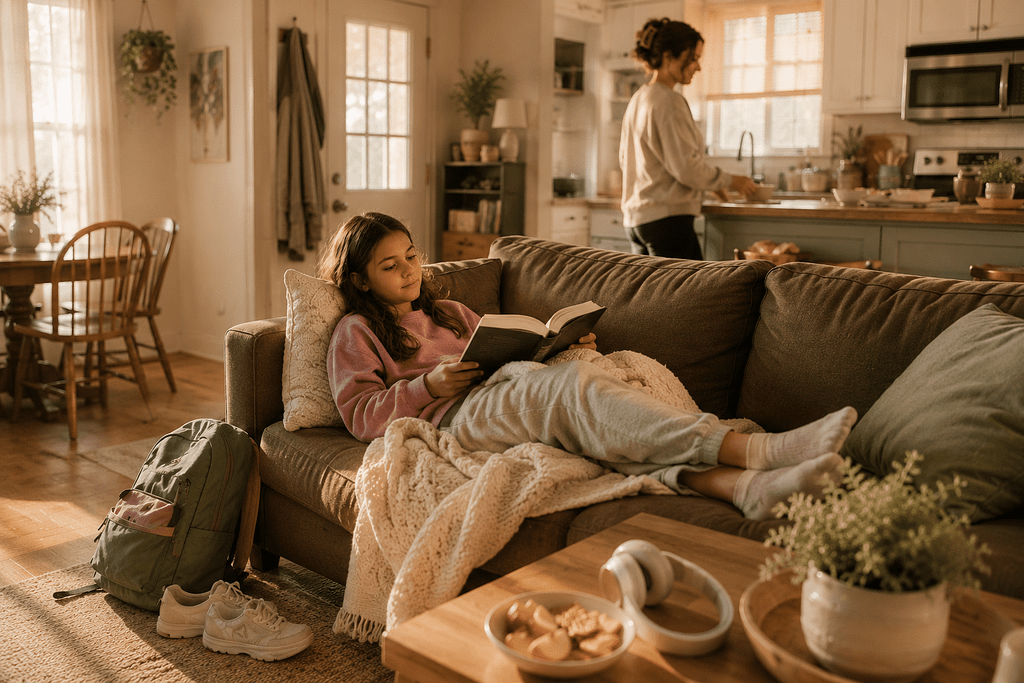
Why the After-School Routine Transition Can Feel So Hard
Kids spend a huge part of their day following directions, switching between activities, interacting with other people, solving problems, and managing expectations. Then they come home, and sometimes all of that effort seems to fall out of them at once.
After-School Routine
That transition can show up as:
- Crankiness or arguing
- Zoning out in front of a screen
- Constant snack requests
- Complaining or crying over something surprisingly small
- Ignoring every question you ask
Meanwhile, you may already be tired yourself. That combination can make the hours between afternoon and bedtime feel much harder than they need to.
A simple after-school rhythm gives everyone a little breathing room.
It does not have to be a rigid minute-by-minute schedule- just a familiar order to the evening.
After-School Routine
Step 1: Let Everyone Land First
One of the easiest ways to make the afternoon harder is to start firing questions the second everyone walks through the door:
- “How was your day?”
- “Do you have homework?”
- “Did you turn that paper in?”
- “What happened with your friend?”
- “Why is your lunchbox still full?”
Most kids need a minute.
Give them a short transition period before expecting too much.
Maybe they change clothes, flop onto the couch, sit quietly in their room, or tell you absolutely nothing about their day while staring into the refrigerator.
All of that is acceptable.
Even ten or fifteen minutes of decompression can make a huge difference.

Step 2: Feed Them Before Solving Anything
A surprising number of family problems between 3:00 and 5:00 can be traced back to hunger.
Before homework, chores, or serious conversations, start with a snack.
It does not have to be elaborate.
Try easy options such as:
- fruit and cheese
- crackers and peanut butter
- popcorn
- veggies and dip
- toast
- a granola bar
- light leftovers
- a smoothie
Keeping a few dependable after-school snacks available can also cut down on the familiar refrain:
- “Can I have something to eat?”
- “What can I eat?”
- “There’s NOTHING to eat.”
There is food, of course.
They usually mean there is nothing they currently feel like eating- an important distinction.
Step 3: Do One Tiny Reset
After everyone has had a chance to decompress and eat, spend a few minutes resetting the obvious mess from the day- not the entire house, not a two-hour chore session, just the things that will make tonight and tomorrow easier.
That might mean:
- shoes go where they belong
- backpacks get emptied
- lunchboxes go to the kitchen
- important papers go in one spot
- dirty clothes go in the hamper
- water bottles get refilled
Think of it as helping tomorrow’s version of your family. Five or ten minutes now can prevent a lot of frantic searching later.

Step 4: Handle the Must-Do Stuff
Once everyone has landed, eaten, and reset a few things, move into whatever genuinely needs to happen that evening.
For some families, that means homework. For others, it might be reading, chores, activities, or preparing something for the next day.
Try to separate must-do tasks from nice-to-do tasks:
- Homework due tomorrow? Must do.
- Packing the school bag? Probably must do.
- Completely reorganizing the bedroom because the closet suddenly looks disastrous? That can wait.
Not every problem needs to become tonight’s problem.
Step 5: Create a Predictable Dinner Window
Dinner does not need to happen at exactly 6:02 every evening, but a general dinner window can help anchor the rest of the night. If your family usually eats sometime between 5:30 and 6:30, everyone has a rough idea of what comes next.
And remember: dinner does not have to be impressive to count.
- Sandwiches count.
- Breakfast for dinner counts.
- Frozen pizza counts.
- Leftovers count.
- Pasta with jarred sauce absolutely counts.
Feeding your family is not a nightly cooking competition.
After-School Routine

Step 6: Do a 10-Minute Evening Reset
After dinner, try a quick family reset.
Ten minutes is enough: put on music, set a timer, and have everyone handle a few small things before the evening moves on.
For example:
- One person clears the table.
- Someone loads the dishes.
- Someone picks up the living room.
- Someone gathers what is needed for tomorrow.
Then stop.
This part matters: do not let the ten-minute reset turn into a 47-minute deep-cleaning session because you suddenly noticed the baseboards.
The baseboards have survived this long.
They will continue to survive.
After-School Routine
Step 7: Shift the House Into Slower Mode
At some point, the evening needs to stop feeling like one long list of tasks.
Help the house shift into a slower rhythm with small cues that signal the day is winding down.
- Lower the lights.
- Turn off some of the noise.
- Put on pajamas.
- Make tea.
- Watch a show together.
- Read or talk.
- Let everyone disappear into their own corners for a little while.
Choose whatever tells your family, “We’re done doing for today. Now we’re home.”
That transition matters.
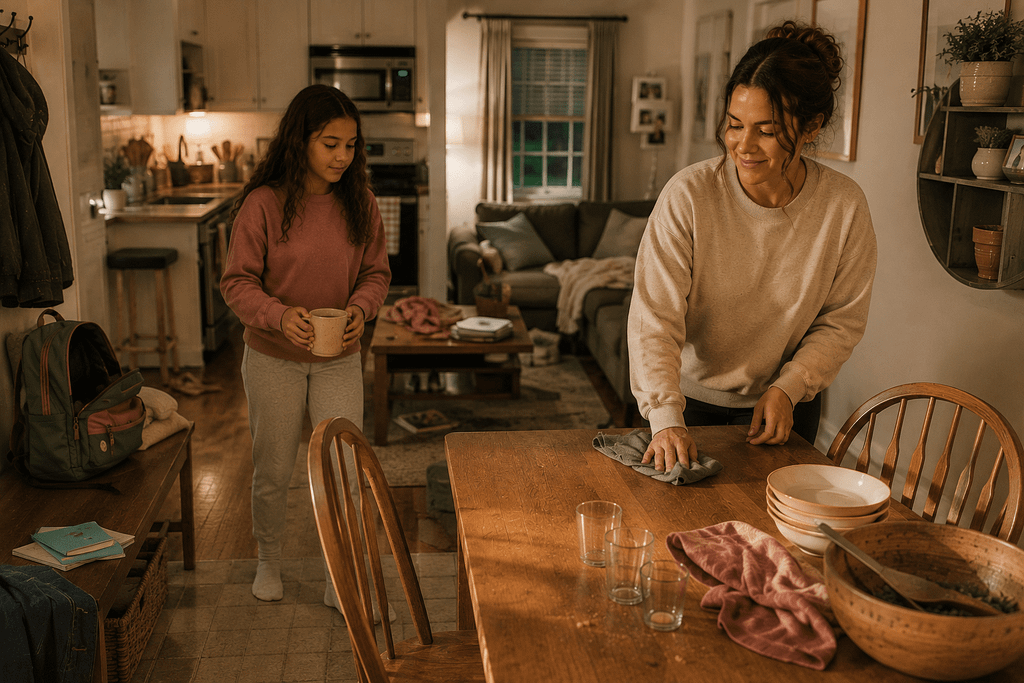
A Simple After-School Routine Could Look Like This
Here is the whole thing without turning it into an elaborate schedule:
Come home → decompress → snack → quick reset → must-do tasks → dinner → 10-minute tidy → slow evening
After-School Routine
That is it.
You can move things around.
Skip steps.
Adjust it for activities.
Let homework happen later.
Eat earlier.
Eat later.
Some nights the routine will work beautifully.
Other nights someone will have somewhere to be, dinner will happen in shifts, and you’ll realize the backpack is still sitting by the front door at bedtime.
That does not mean your routine failed.
It means you have a family.
When the routine completely falls apart
There will be days when none of this happens.
Those days need a routine too.
My favorite version is:
Feed everyone.
Handle what absolutely cannot wait.
Prepare the bare minimum for tomorrow.
Go to bed.
After School Routine
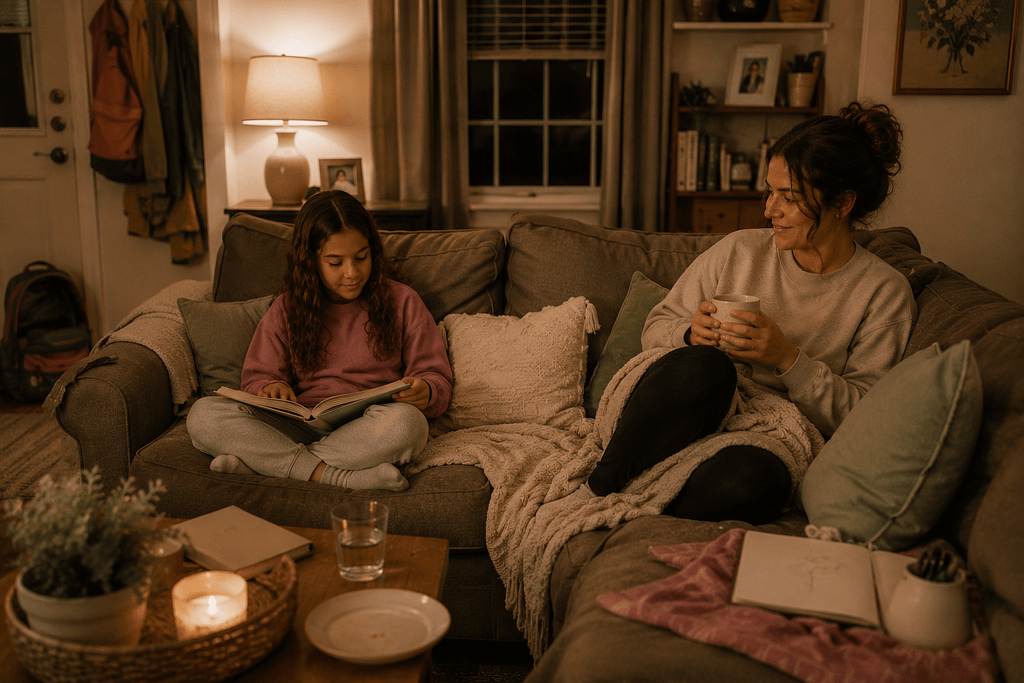
That is the routine.
You do not have to rescue the entire day at 7:30 p.m.
A difficult afternoon does not require a heroic evening.
Sometimes the kindest thing you can do for your family is simply stop adding more expectations.
How to make the After School routine actually stick
The trick is not creating the perfect routine.
It is creating one simple enough to repeat.
Start with just two or three anchors.
For example:
Snack → backpacks → dinner
Once those feel automatic, add something else.
You also do not need a beautifully designed family command center with seventeen color-coded bins unless you genuinely enjoy that.
A basket by the door can work.
A hook can work.
A sticky note can work.
The best system is usually the one your family will actually use.
After-School Routine
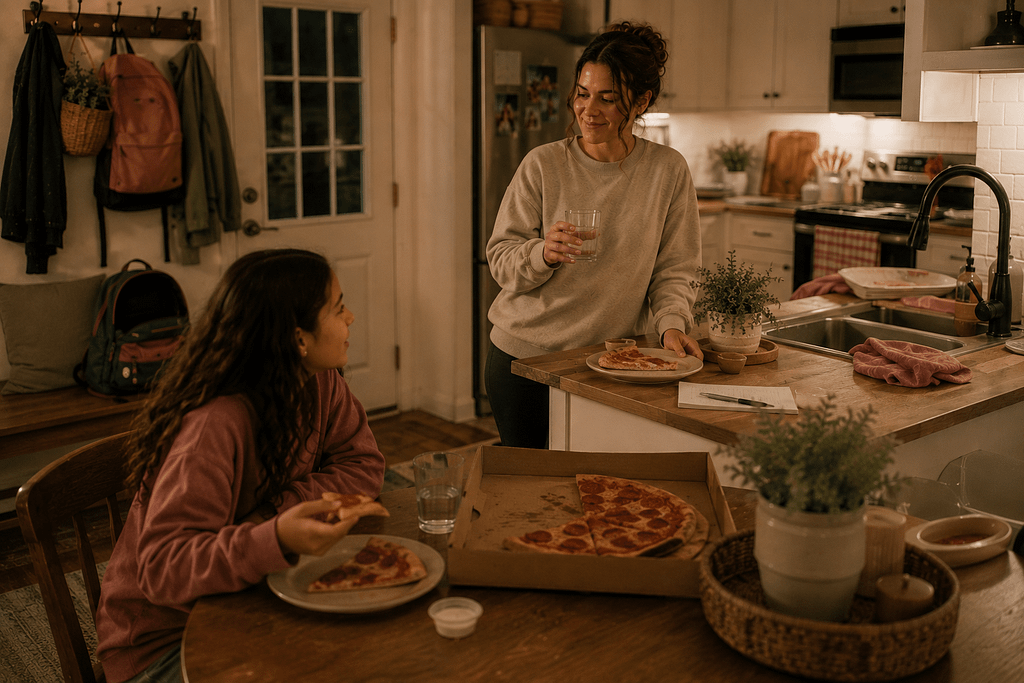
A calmer evening starts with less pressure
A good after-school routine does not guarantee that nobody will argue.
It does not mean your child will cheerfully complete every responsibility.
It does not mean you will suddenly become the kind of mother who remembers every permission slip three days early.
It simply creates a little predictability during one of the busiest parts of the day.
And sometimes that little bit of structure is enough to make home feel calmer.
Not spotless.
Not silent.
Not perfectly organized.
Just calmer.
Because that is the kind of home we are aiming for around here.
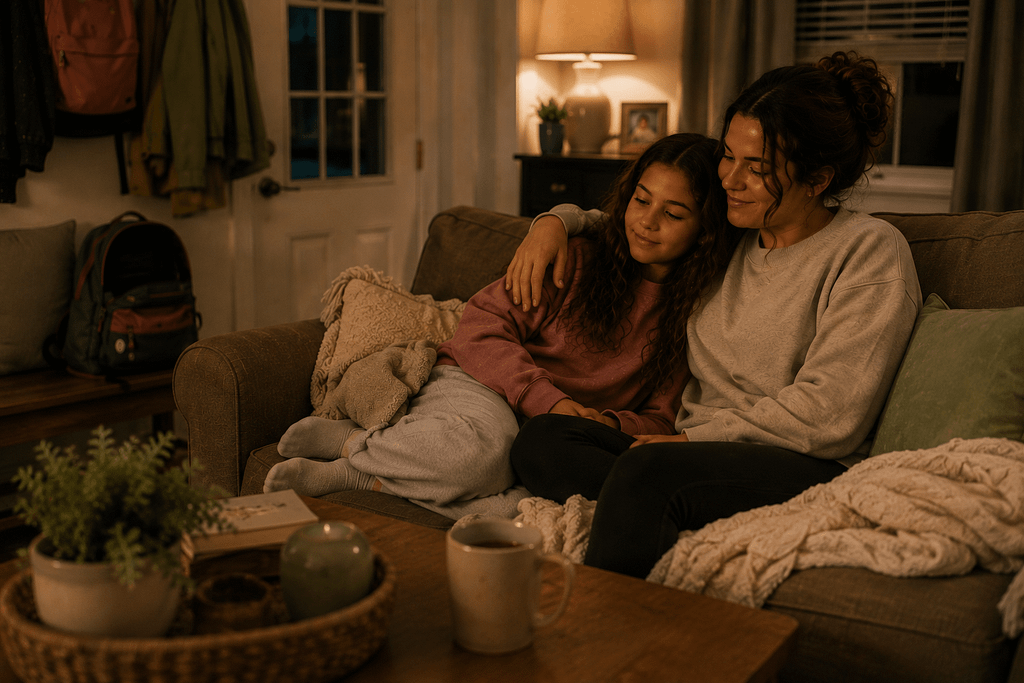
A home where people can make mistakes.
Where routines bend.
Where hard days happen.
Where tomorrow gives us another chance.
And where raising good humans matters much more than looking like we’ve got motherhood perfectly figured out.
After school routine
Want a little help making this routine your own?
Grab the free Calm After-School Reset printable to create a flexible after-school rhythm that works for your family.
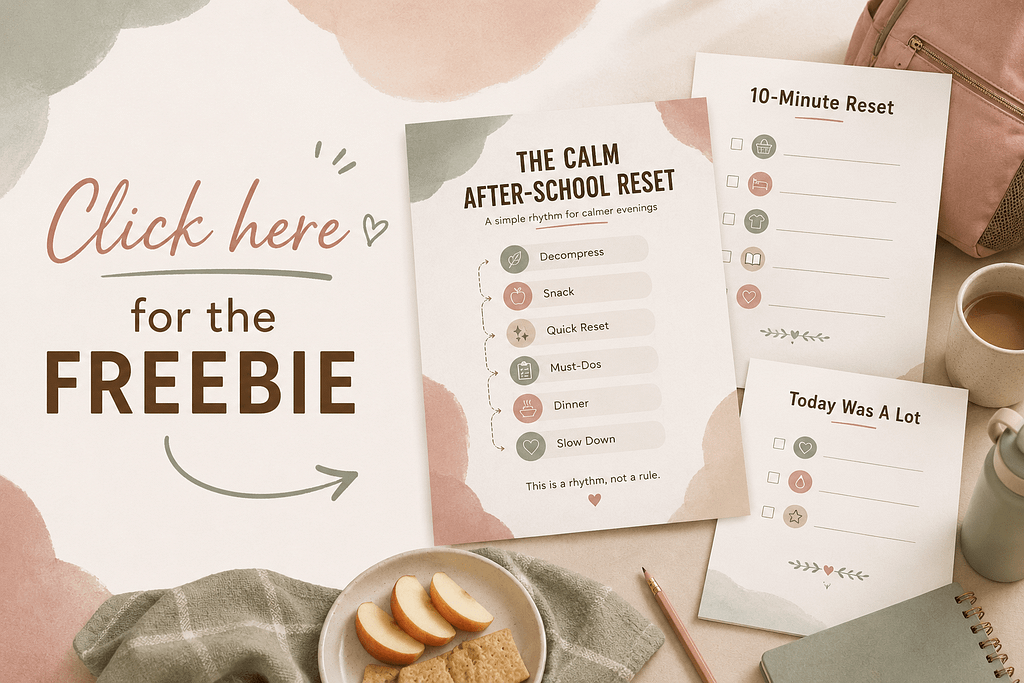
It includes a simple routine planner, a 10-minute reset checklist, and a bare-minimum version for those today was a lot evenings- because calm doesn’t have to be perfect.
Back to School Self-Care for Busy Moms
The Hidden Weight of Being the Strong One at Home
After-School Routine