

Dry Skin and Eczema
How to Stop Dry Skin and Eczema in Winter for Kids
A practical, winter-proof guide for parents who are tired of scratching, flakes, and midnight complaints.
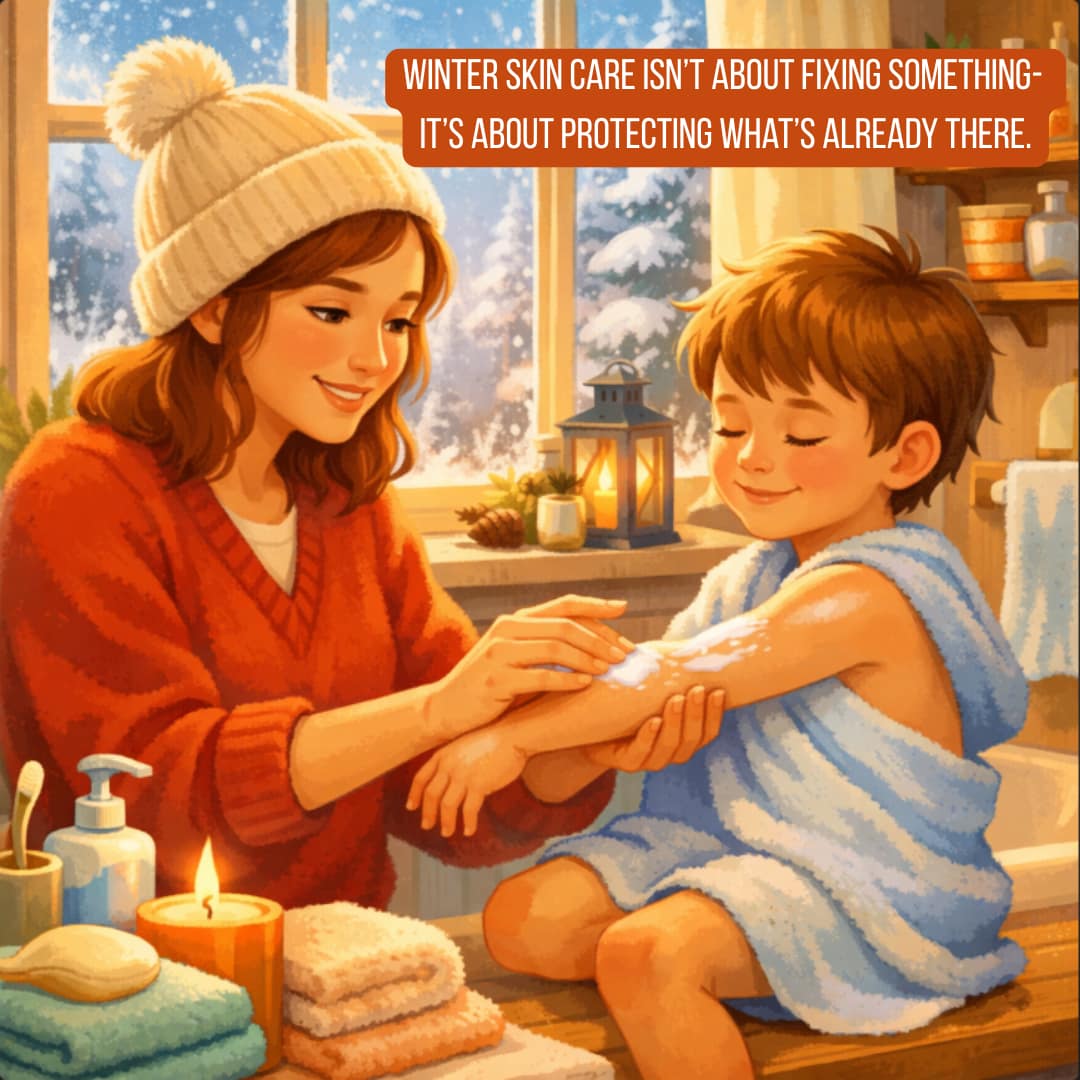
Winter is hard on kids’ skin.
Cold air outside, dry heat inside, frequent handwashing, heavy clothing rubbing sensitive areas- it’s the perfect storm for dry skin and eczema flare-ups.
Even kids who have “normal” skin in summer can suddenly turn itchy, red, or patchy once temperatures drop.
The good news: winter skin issues are manageable.
You don’t need a 12-step spa routine or a bathroom full of expensive products.
You need consistency, the right timing, and a few smart adjustments.
Below is an in-depth, parent-tested list of what actually helps.
Dry Skin and Eczema Tips & Tricks
1. Understand Why Winter Makes Kids’ Skin Worse
Kids’ skin is thinner and loses moisture faster than adult skin.
In winter, three things happen at once:
- Cold outdoor air holds less moisture, so skin dries out faster.
- Indoor heating strips humidity from the air.
- Kids bathe, wash hands, and bundle up more- each one disrupting the skin barrier.
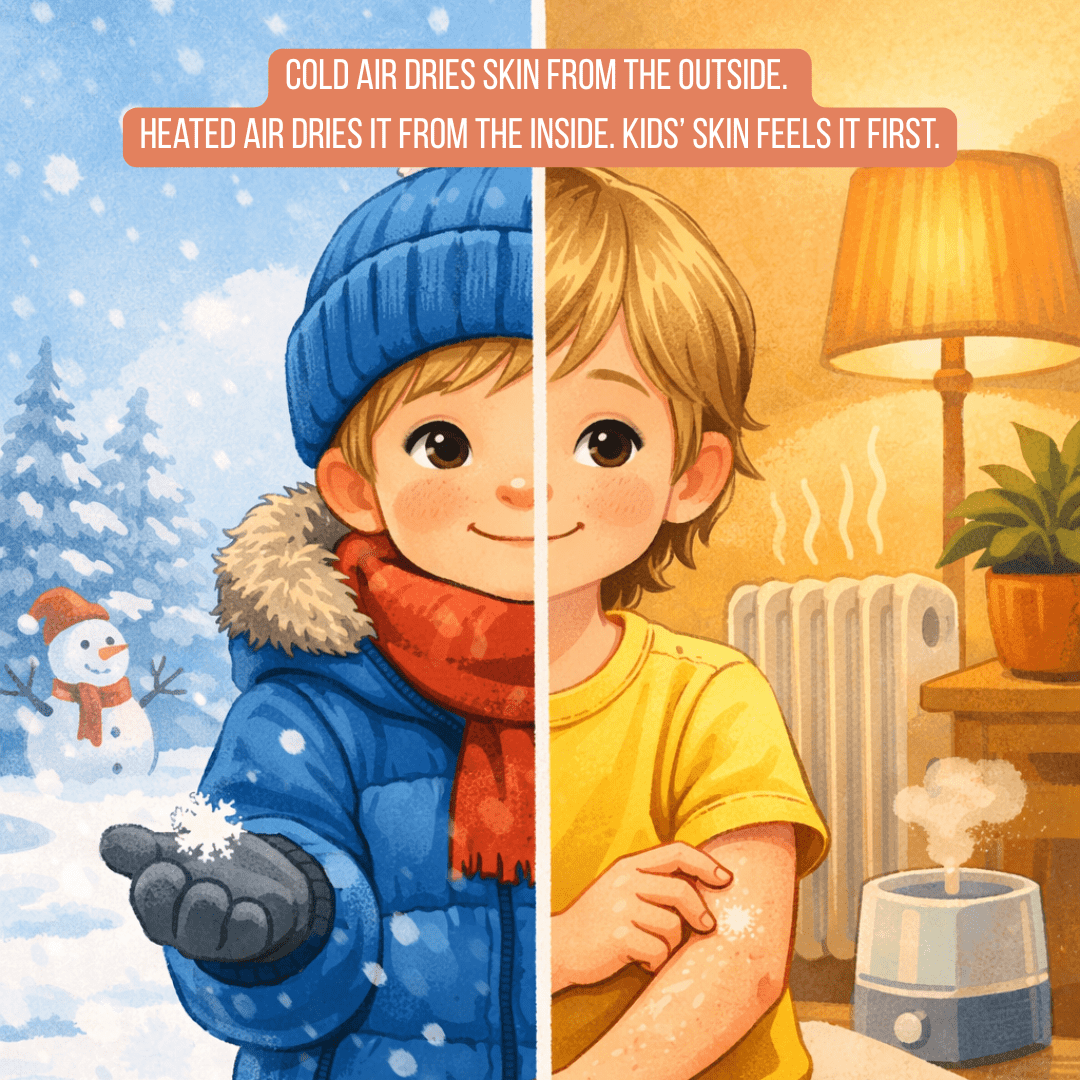
For children with eczema, this weakened barrier allows irritants and allergens to sneak in, triggering inflammation, redness, and itching.
The goal of winter skin care is simple: protect the skin barrier and lock moisture in before it escapes.
2. Shorten Baths and Lower the Water Temperature
Long, hot baths feel comforting in winter- but they’re one of the biggest eczema triggers.
What helps instead:
- Warm (not hot) water
- Baths or showers kept to 5–10 minutes
- No bubble bath or fragranced bath additives

Hot water strips natural oils from the skin, making dryness worse within hours.
If your child loves baths, keep them short and moisturizing rather than long and steamy.
3. Moisturize Immediately After Bathing (Timing Matters)
This is the single most important step- and it’s all about timing.
Apply moisturizer within 3 minutes of getting out of the bath or shower, while the skin is still slightly damp.
This traps moisture in instead of letting it evaporate.
Think of it like sealing a sponge before it dries.
If eczema is severe, moisturizing twice daily (morning and night) can make a noticeable difference.
4. Choose Thick, Fragrance-Free Moisturizers
Lotions are usually too thin for winter skin. Creams and ointments work better because they create a stronger barrier.
Look for:
- Creams or ointments rather than lotions
- Fragrance-free and dye-free formulas
- Minimal ingredient lists
Petroleum-based ointments, thick creams, and eczema-specific formulas tend to work best in winter.
If a product stings when applied, it’s likely irritating already-damaged skin.
5. Switch to Gentle Soaps and Cleansers
Many “kid” soaps still contain fragrances and harsh surfactants.
What to avoid:
- Strong scents
- Antibacterial soaps
- Soaps that foam aggressively
What to use instead:
- Gentle, fragrance-free cleansers
- Soap-free or low-lather options
- Products labeled for sensitive or eczema-prone skin
You don’t need to soap the entire body every day- often the hands, feet, and diaper/underwear area are enough.
Dry Skin and Eczema Tips & Tricks
6. Dress Kids in Skin-Friendly Fabrics
Winter clothing can quietly make eczema worse through friction and heat trapping.

Better choices:
- Soft cotton layers against the skin
- Loose-fitting clothes
- Tag-free shirts when possible
Try to avoid:
- Wool directly on skin
- Rough seams
- Tight clothing that traps sweat
Sweat can irritate eczema just as much as dryness, so breathable layers matter.
7. Add Moisture Back into the Air
Indoor heating dries out skin around the clock.
A cool-mist humidifier can help rebalance moisture levels, especially at night.
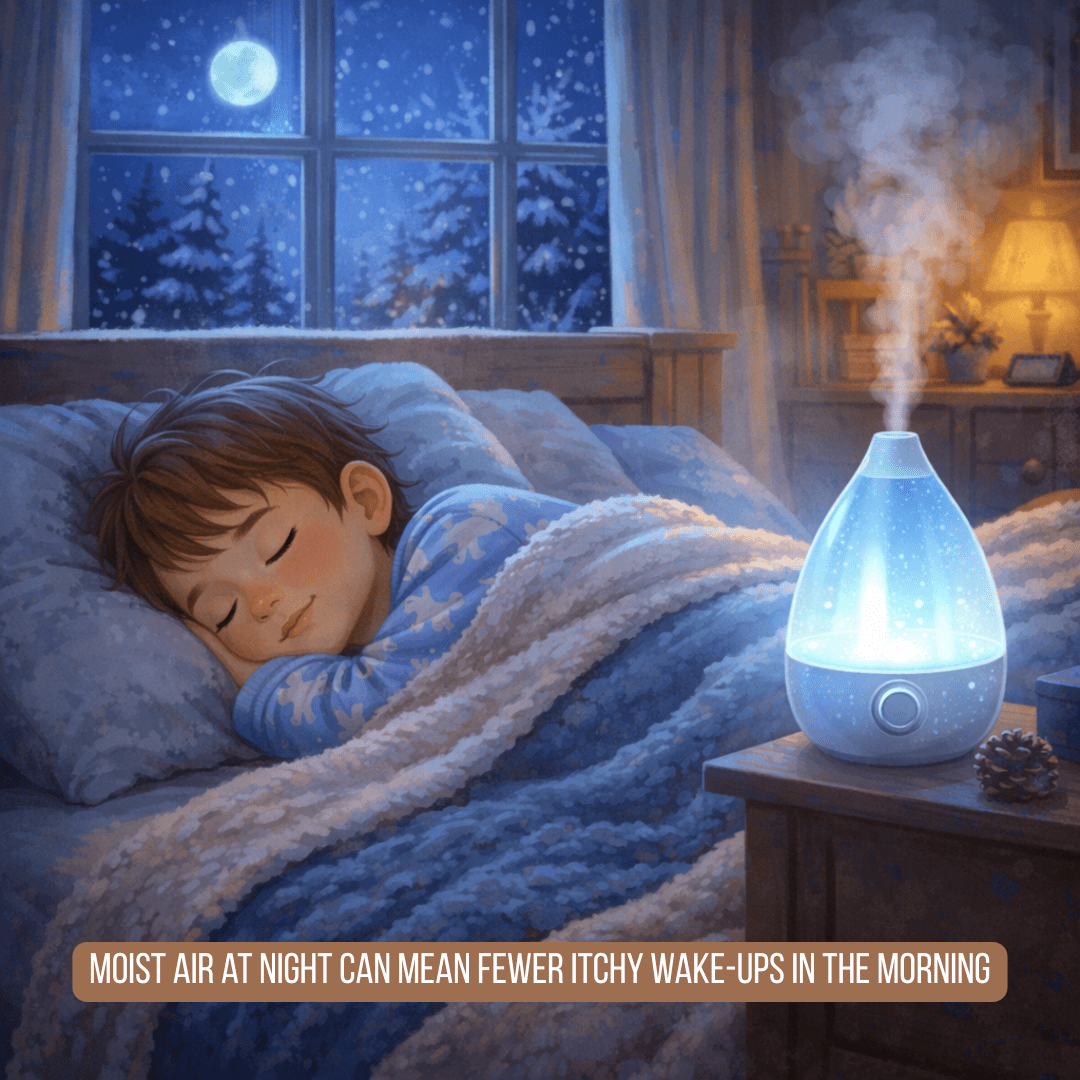
Helpful tips:
- Use a humidifier in your child’s bedroom
- Clean it regularly to prevent mold
- Aim for comfortable humidity, not damp air
This can reduce nighttime itching and morning dryness, particularly for kids with eczema patches on their face or hands.
8. Be Gentle With Towels and Laundry
How you dry and wash clothes matters more in winter.
After bathing:
- Pat skin dry instead of rubbing
- Leave skin slightly damp before moisturizing
For laundry:
- Use fragrance-free detergent
- Avoid fabric softeners and dryer sheets
- Rinse clothes thoroughly
Even small irritants can trigger big flare-ups when skin is already compromised.
9. Protect Skin From Cold Wind and Wet Weather
Exposed skin takes a beating in winter.
Before going outside:
- Apply a thicker moisturizer to cheeks, lips, and hands
- Use gloves or mittens
- Cover exposed areas when wind is strong
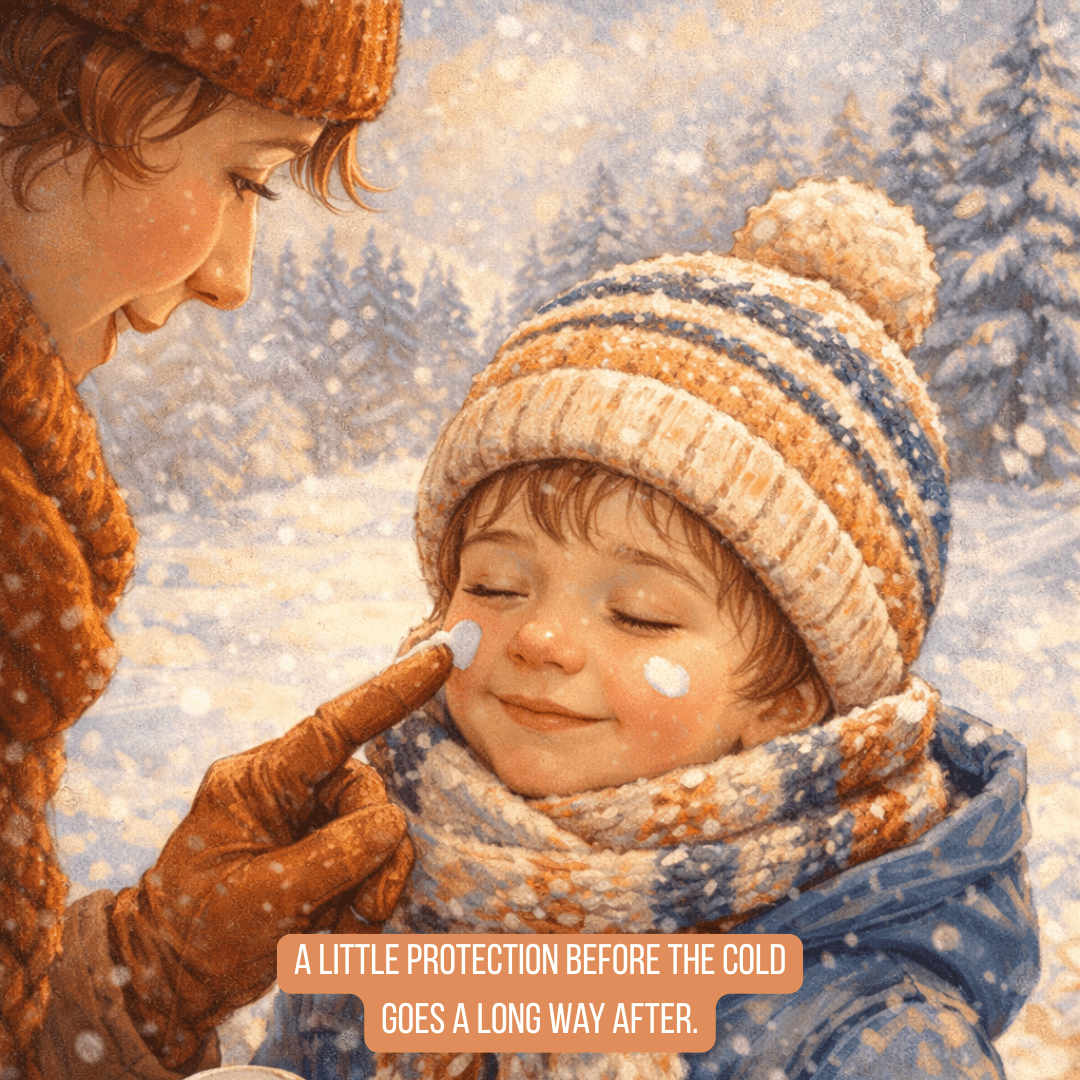
Lip balm and hand cream become daily essentials in winter- not luxuries.
10. Know When to Treat and When to See a Doctor
Some eczema flare-ups need more than moisturizer.
Talk to a pediatrician or dermatologist if:
- Skin is cracked, bleeding, or oozing
- Itching disrupts sleep regularly
- Redness spreads or looks infected
- Home care isn’t improving symptoms
Prescription creams, short-term steroid use, or allergy evaluation can be incredibly helpful when used appropriately.

Final Thoughts: Consistency Beats Perfection
Winter skin care doesn’t have to be complicated.
What works best is doing a few things consistently:
- Gentle bathing
- Immediate moisturizing
- Avoiding known irritants
- Supporting the skin barrier daily
Dry skin and eczema flare-ups can be frustrating- for kids and parents- but they’re not a failure.
They’re a signal.
With the right adjustments, winter doesn’t have to mean months of discomfort.
Winter Dry Skin and Eczema FAQs for Kids
Q: Why does my child’s eczema get worse in winter?
Cold air, indoor heating, and frequent handwashing dry out the skin barrier, making eczema flare more easily.
Q: How often should I moisturize my child’s skin in winter?
At least twice daily, and always within minutes after bathing to lock in moisture.
Q: Is dry skin the same as eczema in kids?
No. Dry skin can happen to anyone, while eczema is a chronic condition that involves inflammation and itch cycles.
Q: Should kids with eczema bathe less in winter?
Not necessarily—short, warm baths followed by immediate moisturizing can actually help.
Check out this post on my other blog:
Creative Routines for Low Energy Days That Actually Work
January Mental Load: The Invisible Weight of the New Year
- kids eczema winter treatment
- winter dry skin remedies for kids
- child eczema flare ups in winter
- best moisturizer for kids eczema winter
- winter skin care routine for kids
- eczema itching worse at night child
Dry Skin and Eczema
Dry Skin and Eczema